
Our First Child… Casa Santorini
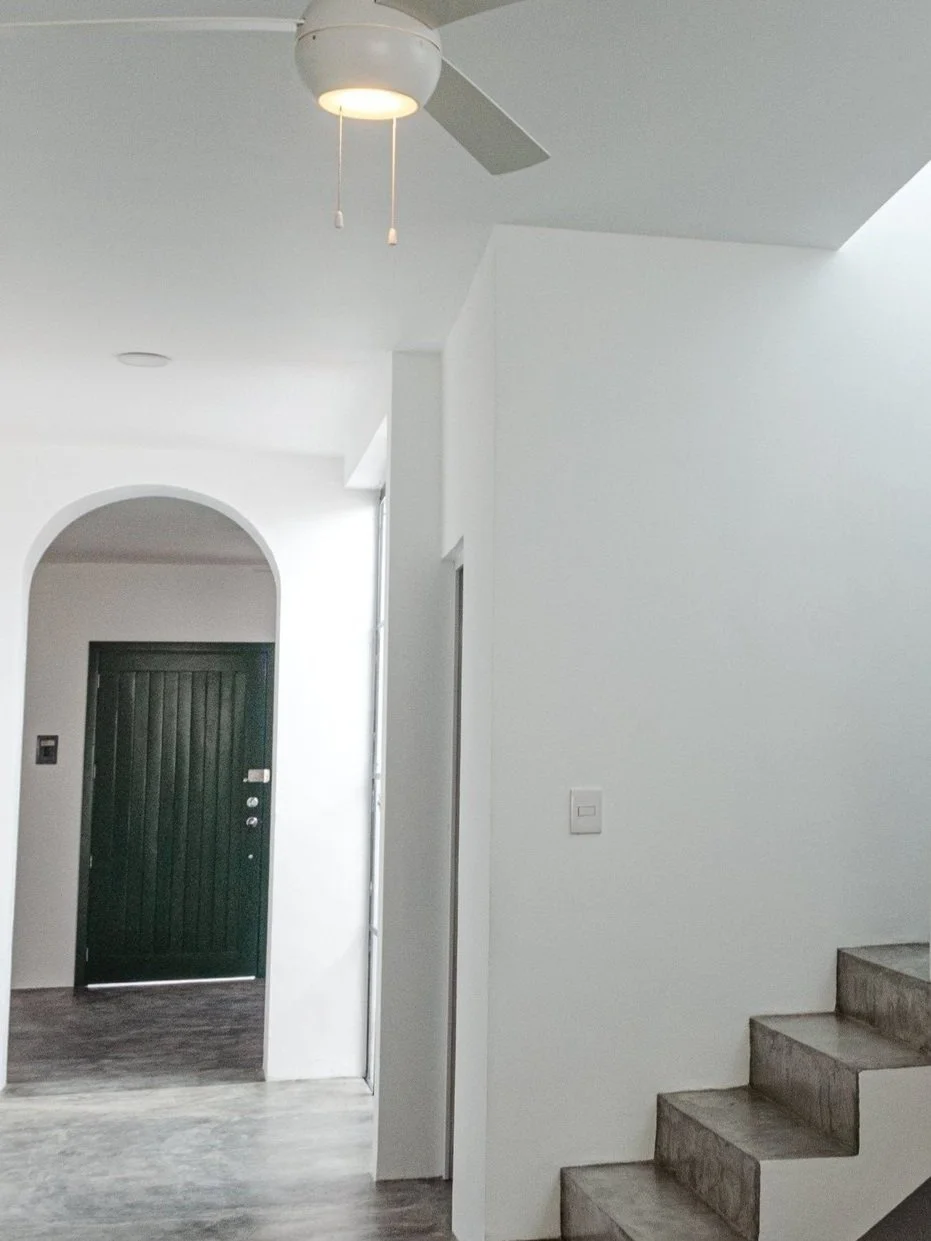
It has been a while since we last wrote about Casa Santorini, but we are on a mission to share all the details of our journey in Mexico — so we are starting at the beginning, with our very first project.
We have said many times that we did a complete 180 on our careers in 2019. What you may not know is that we had zero experience in what it takes to renovate a house. The costs, the management of different sets of workers, the delivery dates, the consequences of working on an old home, the permits, the small excitements and the larger disappointments. None of it.
Many people come to Mexico and dream of fixing up an old home. Modernize it, make it gorgeous. Most hire a project manager of some kind to navigate the waters. A few try to do it themselves — and here in Mazatlán, we have yet to encounter a success story of that nature.
We were not DIYers. We did not feel sure that the existing roof would hold if we started knocking down walls. So we hired a project manager. Our thinking was that we would pay someone to teach us how to do what they do — so that on the second project, we could do it ourselves. We found an engineer with a long list of vendors, and we drafted a project proposal together.
With his help we drew blueprints and submitted permits to both Ayuntamiento (City Hall) and INAH, since Casa Santorini sat inside Centro's historic polygon. We don't know how long permits take in the United States, but we can tell you firsthand that in Mazatlán they take months.
Paperwork was filed in March 2019. With verbal approval from both Ayuntamiento and INAH, we began work in April. By July, our permits were still not finalized. Work was suspended. It took us about two and a half weeks to be cleared again. That was when the red flags — until then lightly waving — started waving very hard.
Part of the agreement with a project manager (here in Mexico they may be called architect, engineer, director de obra, supervisor de obra, or even the maestro albañil) is that they will provide the resources required to renovate. Our first red flag was that work was happening on the job site without our manager present. We would arrive to find mason workers making revisions outside of the blueprints — revisions we did not approve — and we, not the manager, would be the ones explaining the plans to the crew. When confronted, his answer was usually, "oops."
Every "oops" meant additional money to undo work that should not have been done. Plumbers came and went; we'd hand over cash for materials and they would not return. Materials would arrive that we did not need and quietly disappear in the back of the electrician's pickup. The straw was the repeated request for cash to pay workers' social security — and finding out, eventually, that none of the workers were actually enrolled. If anything had happened on the job site, we would have been on the hook for everything.
The renovation finished four months late, and we covered many costs we never planned for. That entire experience taught us that we needed to take this into our own hands — be our own project managers, and be 100% involved in every step. That is the spine of how 35 Agave works today.
Until next time. — Sophia y Socrates (and baby Soc)
Sophia is one half of 35 Agave. She leads the design, the writing, and the long conversations about color, light, and what makes a house feel like a home.